Sephora Hearts Not Hate: $1 per Sephora Collection Item on Oct. 9 and 10
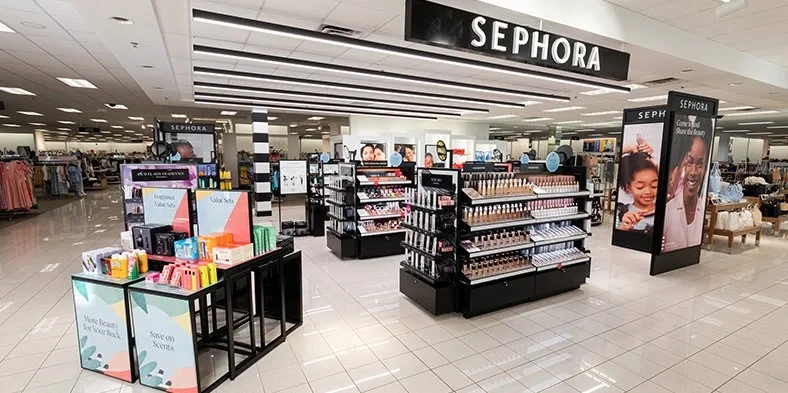
Sephora's first global cause gives $1 to the anti-harassment nonprofit Right To Be for every Sephora Collection product sold in the U.S. on Oct. 9 and 10, including at Sephora at Kohl's.
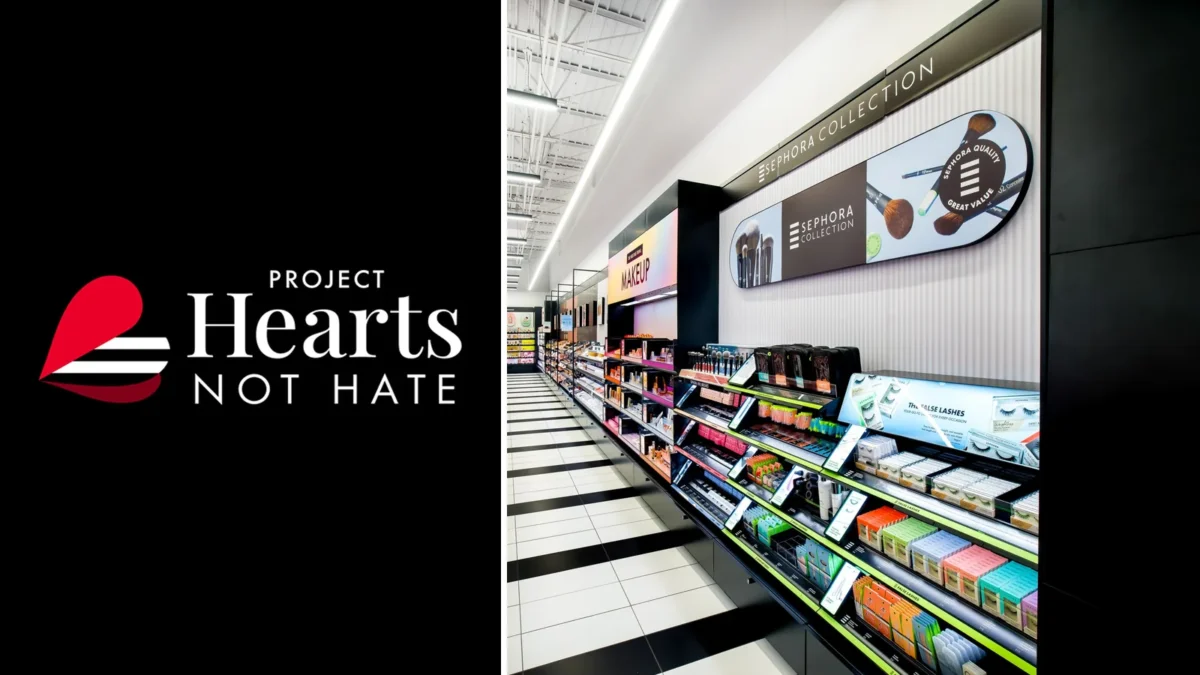
- Sephora launched Project Hearts Not Hate on Sept. 25, its first global cause, aimed at people being judged, harassed or shut out because of how they look.
- On Oct. 9 and 10, Sephora gives $1 for every Sephora Collection product sold in the U.S., including at Sephora at Kohl’s, with at least $200,000 guaranteed.
- The money goes to Right To Be, the nonprofit behind the “5Ds” of bystander intervention, which will start training Sephora employees in 2027.
Sephora is turning two shopping days into a donation drive. On Friday, Oct. 9, and Saturday, Oct. 10, World Mental Health Day, every product from its in-house brand, Sephora Collection, sold in the U.S. adds $1 for Right To Be, a nonprofit that trains people to step in when they see someone harassed.
The two days kick off Project Hearts Not Hate, which Sephora announced from Paris on Sept. 25 as its first global corporate cause. The target is what the company calls appearance-based hate: being judged, mocked or excluded because of how you look.
How does Sephora’s Hearts Not Hate donation work?
It’s $1 per product, not per dollar spent, so a $6 sheet mask counts the same as an $18 eye palette. In the U.S., Sephora pays into the Sephora US Impact Fund, which the Tides Foundation administers, and recommends Right To Be as the recipient.
The total has a floor and a ceiling. Sephora guarantees at least $200,000 in the U.S. and caps the total at $350,000: up to $300,000 from Sephora’s own sales and up to $50,000 from Sephora at Kohl’s, the Sephora shops inside Kohl’s stores. A Sephora Collection buy at Kohl’s counts, too.
In practice, that means the Sephora cap is hit at 300,000 products sold over the two days. If sales fall short of 200,000 products, the guaranteed $200,000 still goes out. The announcement counts every Sephora Collection product sold on those days and doesn’t carve out online orders.
The same two days run in other countries, with local amounts. Shoppers in Canada add C$1 per product, up to C$150,000, and in the U.K. it’s £1 per product, under a cap of €200,000 for Sephora’s European markets.
What counts as a Sephora Collection product?
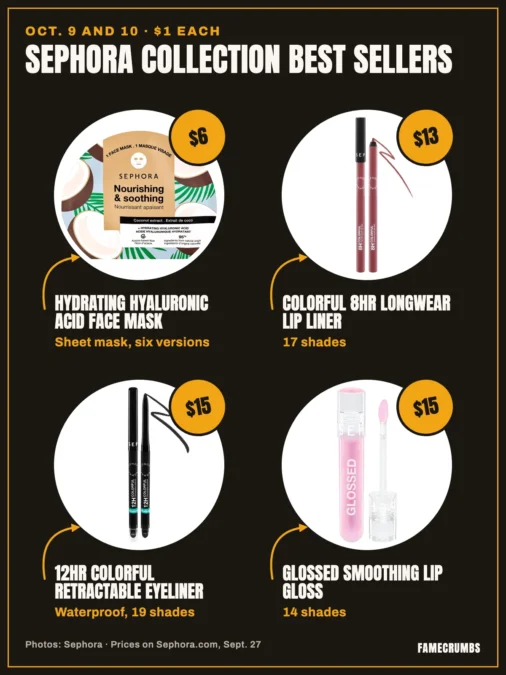
Sephora Collection is the store’s own label, the one with the Sephora name on the package. On Sept. 27, Sephora.com listed 275 Sephora Collection products, and its best-seller sort was led by the $6 Hydrating Hyaluronic Acid Face Masks, the $13 Colorful 8HR Longwear Transferproof Lip Liner and the $15 12HR Colorful Waterproof Retractable Eyeliner.
What did Sephora’s survey on appearance-based hate find?
Sephora commissioned Ipsos to survey 20,001 adults online in 10 countries, including the U.S., Canada and the U.K., from Aug. 12 to 31. In the U.S., 70% said they had personally experienced appearance-based hate, and 40% said they had seen someone targeted for their looks in the past 12 months.
One in five Americans (21%) said someone had told them in the past year that they would look better if they changed something about their appearance. Across the 10 countries, the share who had experienced it rose to 85% among 18- to 24-year-olds.
Body type, weight or size was the most-cited reason (37%), ahead of skin tone, ethnicity or origin (35%) and sexual orientation (29%). Most respondents (82%) said social media has made it more frequent, but nearly 90% of the judgment and exclusion they described happened offline.
Beauty has the power to help people express who they are and feel confident in their identity, but appearance is instead unfortunately too often a source of judgement or exclusion. As a global beauty leader, we have a responsibility to help shift a culture of judgement to a culture of acceptance and positivity.
Deborah Yeh, global chief marketing officer at Sephora
The survey also found the gap the campaign is built around: 57% had watched someone be judged, bullied or excluded for their looks, and 81% agreed that people often don’t know what to do when they see it.
What is Right To Be, and what are the 5Ds of bystander intervention?
Right To Be grew out of a 2005 conversation among seven young people, including its co-founder and president, Emily May, and became a nonprofit in 2010 under the name Hollaback!. It says it has worked with 5 million people in more than 40 countries.
For Sephora, it wrote a separate course, the Sephora H.E.A.R.T.S. training, on how to prevent, step in and follow up when someone is targeted for how they look. Right To Be will teach it to Sephora employees and local communities starting in 2027.
May called the partnership “a historic investment in the movement to end appearance-based hate.”
The group’s public method is the 5Ds: Distract, Delegate, Document, Delay and Direct. Four of the five are indirect, and all are meant to help without escalating. Distract means interrupting without mentioning the harassment, like asking the person being targeted for directions.
Delegate means getting help from someone else, such as a store supervisor or a bus driver. Document means recording or taking notes, but only once someone is already helping, and never posting it without the targeted person’s permission.
Delay means checking in afterward: asking if the person is OK and how you can help. Direct means naming the behavior to the person doing it, kept short, and only after making sure everyone is physically safe and the situation is unlikely to escalate.
The method started with three. Right To Be says it worked with the bystander program Green Dot on Distract, Delegate and Direct in 2012, added Delay in 2015 and Document in 2017. It also runs free virtual bystander intervention trainings open to anyone.
More in Style: what the words on a wig box mean, from lace front to glueless, and how the Capillus red-light headband works. For new parents, the Kindred Bravely nursing bra with no wires or seams. Everything else is in Style.
— Bruno Monteiro
Sources: Sephora’s announcement of Project Hearts Not Hate (Paris, Sept. 25, 2026), with remarks by Deborah Yeh, Emily May and Adélaïde Zulfikarpasic of Ipsos, and its donation terms by country; the Ipsos study commissioned by Sephora (20,001 adults in 10 markets, online, Aug. 12 to 31, 2026); Right To Be’s guide to the 5Ds of bystander intervention and its history page; Sephora.com’s Sephora Collection listing, prices and best-seller sort, checked Sept. 27, 2026. Photos courtesy of Sephora and Kohl’s; video by Right To Be and LA vs Hate.
How FameCrumbs reports · Request a correction