Fall Yard Cleanup: Should You Rake Leaves or Mow Them Into the Lawn?
Before you bag another pile, here is what turf scientists at Michigan State, Virginia Tech and Colorado State say to do with fall leaves, pine needles and the last mow of the year.
- You can skip most of the raking. Turf researchers recommend mowing leaves back into the lawn, and Michigan State research found a mower can handle a layer up to about 6 inches deep.
- Whole leaves left in a mat are the real problem: they block sunlight and trap moisture, which invites fungal problems.
- For the last mow of the year, lower the deck by one notch, about half an inch, once the grass stops growing.
The yard cleanup video is having a moment. Feeds are full of before-and-after reveals of overgrown lots and leaf-buried lawns turned neat in a few minutes of sped-up footage.
The part the reveals skip is what happens to the leaves. Most of the time, the answer from the people who study lawns for a living is: leave them on the grass, just smaller. Here is the fall cleanup, one problem at a time.
Your lawn is covered in leaves
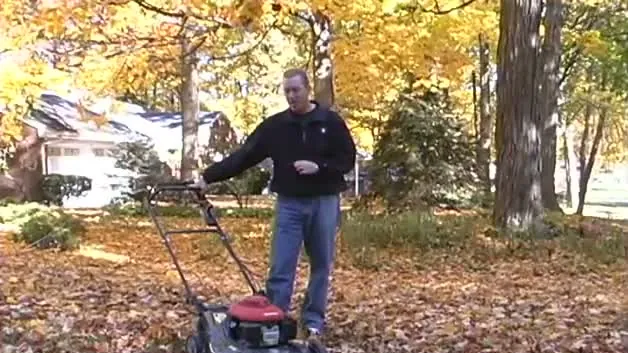
Mow them in. Raise the mower deck to its highest setting and go over the leaves at a normal walking pace, then make a second pass at a right angle to the first.
Michigan State University’s turf program found that a layer up to about 6 inches deep can be shredded this way, depending on the mower.
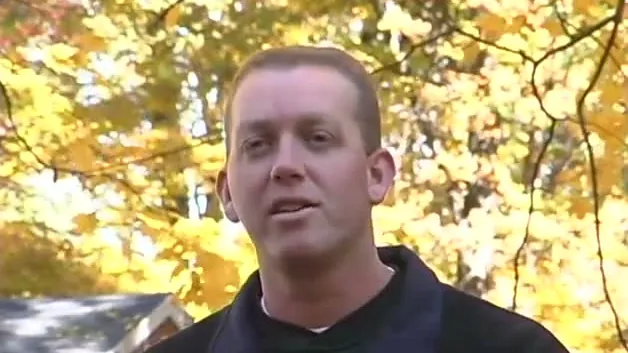
Doing it in the morning helps. “I like to do it in the morning maybe when the turf and the leaves are still a little damp,” said Kevin Frank, a turfgrass scientist at Michigan State, “because it prevents a lot of dust from blowing around.”
Why it works: the mower cuts the leaves into pieces small enough to drop between the grass blades, where they break down over winter.
That returns organic matter and nutrients to the soil. Michigan State’s research found lawns treated this way green up faster in spring, with less fertilizer. Purdue University research on maple leaves found no harm to turf color, growth, thatch or soil pH.
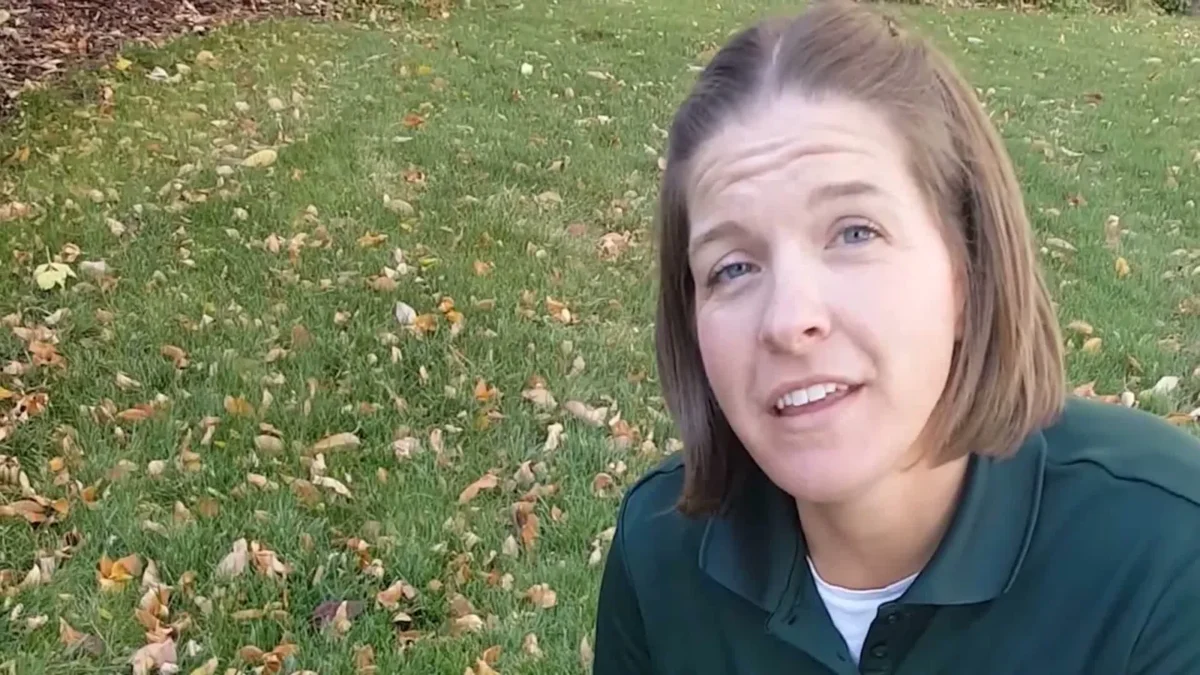
The limit: you should still see grass when you are done. “As long as you can see grass after you’ve mulched, or made a couple passes with your lawn mower, you’re in good shape,” said Alison O’Connor, a horticulture agent with Colorado State University Extension. If you cannot, it is time to remove some.
Whole leaves are sitting on the grass
Break up the mat. A thick layer of whole leaves blocks sunlight and holds moisture against the turf, which raises the risk of fungal problems, according to Michael Goatley Jr., extension turfgrass specialist at Virginia Tech. One pass with the mower, or a rake, fixes it.
You have more leaves than the mower can handle
Move the extra, don’t bag it all. Goatley’s list of outlets: the compost pile, a layer of shredded leaves over garden beds, or your town’s leaf pickup. Remove sticks before mowing, keep the blade sharp and wear eye protection; shredding throws debris.
Colorado State’s video, with O’Connor on leaves and turf specialist Tony Koski on the next problem:
Grass keeps dying under your pine tree
Stop fighting it, and leave the needles. The common belief is that fallen needles make the soil too acidic for grass.
Tony Koski says the real causes are dense shade and dry soil: sprinklers do not reach under the canopy, and neither does most rain. The needles act as a natural mulch, which is healthier for the tree.
You don’t know when to mow for the last time
Wait until the grass stops growing, then drop one notch. Once top growth has stopped, Michigan State advises lowering the mowing height by one notch, typically about half an inch, for a final cut. It cleans up leftover leaf bits and keeps the turf from going into winter too tall.
Doing the inside of the house too? Here is a daily, weekly and monthly cleaning schedule for the fall reset. And for the fattest yard visitors in America, Fat Bear Week voting is open. More from Trending.
— Bruno Monteiro
Sources: Michigan State University Extension and MSU Turfgrass Science (leaf mulching research; Lawncare University: Dealing With Leaves, Kevin Frank); Michael Goatley Jr., Virginia Cooperative Extension, “Leave” Them Alone: Lawn Leaf Management (publication 430-521, reviewed 2025), including Purdue University research on maple leaves; Colorado State University Extension, PlantTalk: Mulching Leaves Into Your Lawn (Alison O’Connor, Tony Koski). Photos: CSU Extension (2017) and MSU Turfgrass Science (2011).
Reported from CSUExtension on Youtube.
How FameCrumbs reports · Request a correction