Christa Pike Survives Failed Execution: Where She Is and What’s Next
Tennessee gave the only woman on its death row two doses of pentobarbital on Sept. 30 and she did not die. Her lawyers say she is in critical condition and want the governor to commute her sentence.

- Tennessee tried to execute Christa Pike, 50, the only woman on its death row, on Wednesday, Sept. 30. She was given two doses of pentobarbital and did not die.
- Her lawyers said Thursday afternoon that she is in critical condition at a hospital, and they asked Gov. Bill Lee to commute her sentence. Lee called off the state’s remaining 2026 executions and ordered an outside review.
- She was sentenced to death in 1996 for the 1995 killing of Colleen Slemmer, 19. The state says it followed its execution protocol.
Christa Pike is alive and in critical condition, her lawyers said Thursday, a day after Tennessee tried to execute her by lethal injection and her heart did not stop. She would have been the first woman executed in the state in more than 200 years.
Is Christa Pike still alive?
Yes, according to her attorneys. At a news conference Thursday afternoon, lawyer Randy Spivey said Pike was in critical condition and receiving life-saving medical care. “We don’t have a sense of her prognosis or much update on her health at the moment,” he said.
The Tennessee Department of Correction said only that she was “transported to an off-site medical facility.” Her lawyers said they had not been able to reach her.
What happened during the execution attempt?
The attempt followed a day of court rulings. A federal appeals court granted a temporary stay Wednesday morning, and the U.S. Supreme Court lifted it, 6-3, that evening.
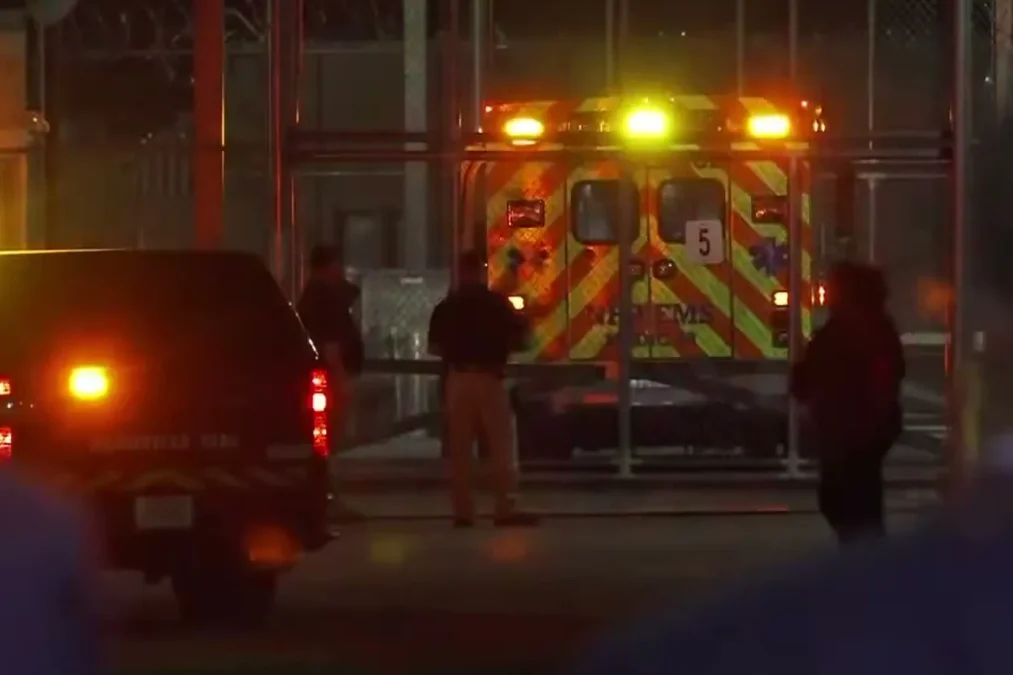
Media witnesses reported that Pike said at 7:34 p.m. that her arm felt like it was “about to burst open.” The second dose was given around 8 p.m. Witnesses heard her snoring loudly, and she was still breathing at 8:53 p.m., when they were asked to leave. An ambulance left the prison at 9:28 p.m.
Spivey said staff “tried to establish an IV line for an hour” and that he counted “at least seven needles, one of which appeared to be bent.” Her lawyers say she has thrombocytosis, a blood disorder, and had warned the state it would make her veins hard to reach.
The Department of Correction said staff “followed every step of the State’s lawful, established execution protocol” and that the chemical “has consistently been effective.”
What did Christa Pike do, and why was she on death row?
Pike and two others killed Colleen Slemmer, 19, a fellow Job Corps participant, in 1995 in a remote part of the University of Tennessee’s agricultural campus in Knoxville. Pike’s boyfriend, Tadaryl Shipp, then 17, was sentenced to life. A third defendant who served as lookout and cooperated received probation.
Pike was convicted of first-degree murder in 1996 and sentenced to death. In 2001, in prison, she was convicted of attempted first-degree murder for assaulting another inmate.
Her lawyers have pointed to a history of severe childhood abuse and untreated mental illness. Lee denied her clemency request, and the Supreme Court turned down her appeal on Tuesday.
Why are her lawyers seeking commutation, and can Tennessee try again?
Last night was not just inefficient, it was cruel, and it was torturous. It was also predictable.
Randy Spivey, attorney for Christa Pike
“Christa has endured punishment greater than any other person in the history of the American death penalty,” Spivey said. “The governor must commute Christa’s sentence now.”
So far Lee has paused executions rather than commute. He called off the remaining 2026 executions, including Gary Wayne Sutton’s on Dec. 3, and ordered “a comprehensive, third-party review to determine exactly what occurred.”
It is the second time this year Tennessee has failed to complete a lethal injection. In May, officials called off Tony Carruthers’ execution after trying for more than an hour to place an IV line, and Lee gave him a one-year stay.
Pike’s lawyers have filed emergency motions to stop another attempt, arguing it would violate the Eighth Amendment’s ban on cruel and unusual punishment.
Courts have allowed a second try before. In 1947 the Supreme Court ruled 5-4 that Louisiana could execute Willie Francis after the electric chair malfunctioned, and he was executed the following year. That ruling treated the first failure as an accident. Pike’s lawyers say hers was predictable.
More crime and court coverage: what Alleigha Botner told the jury at the Caleb Flynn trial, Harvey Weinstein’s 15-year sentence and Patrick Clancy’s 60 Minutes interview. More in Celebrities.
— Bruno Monteiro
Sources: Randy Spivey and Steve Ferrell, attorneys for Christa Pike, news conference of Oct. 1, 2026; Tennessee Department of Correction statements and its page on women on death row; Gov. Bill Lee’s order for a third-party review (Oct. 1); media witness accounts reported by the Nashville Banner, NBC News, CBS News and WSMV; Louisiana ex rel. Francis v. Resweber (1947). Photos: Tennessee Department of Correction (via CBC News) and WBIR.
Reported from WBIR Channel 10 on Youtube.
How FameCrumbs reports · Request a correction